One Paper, Three Countries!
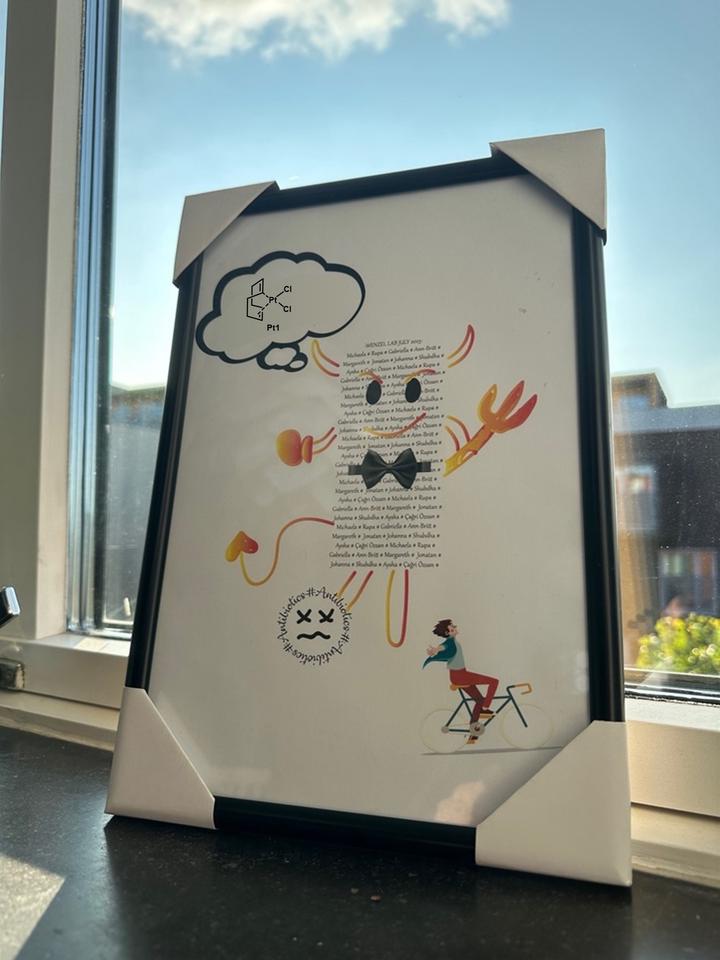
Our paper on Platinum Cyclooctadiene based antibacterials and their Mode of Action now out in npj Antimicrobials and Resistance. What follows is an account from Çağrı on his path across three countries to get this paper over the line, enjoy!
On the 1st of July 2022, I landed at Basel Airport, famous for having exits to three different countries. In hindsight, this was probably the universe’s way of warning me that my PhD would also end up crossing a few borders before reaching its final destination. When I started my PhD almost four years ago (phew, time really does fly), one of the first discussions was about where to begin. Among several possibilities, a previous paper on platinum cyclooctadiene complexes against Gram-positive bacteria immediately caught my attention.

The story seemed unfinished. In the earlier study, they had investigated complexes with modified double bonds and non-chloride ligands, but one question remained unanswered: what would happen if we combined the double-bond modification with a chloride ligand?
After planning the synthetic route, it was time to head to the lab and put theory into practice. Of course, syntheses are always much easier on paper than they are in a flask, but thankfully this one behaved reasonably well and the first target complex was soon in hand. After a while, I had all four derivatives in hand and ready to be tested against bacteria. Then came a result that was both slightly shocking and, ultimately, a major milestone for the project: the complexes showed no antibacterial activity, even at concentrations as high as 100 µM. At first, this was not exactly the outcome I had hoped for. After all, nobody starts a project dreaming of inactive compounds. However, science is often just as much about ruling things out as it is about discovering something new. In this case, the lack of activity turned out to be a new direction for us. While I was figuring out what to do next with the project, we decided that the best way forward was to develop a reasonable synthetic route to access a range of new derivatives. This time, we turned our attention to the allylic position. By modifying this part of the ligand, we hoped to gain a better understanding of the structural features responsible for antibacterial activity. After long hours in the lab synthesizing, purifying, and characterizing these compounds, I finally had six new derivatives ready for biological testing. By this point, I had become quite familiar with the cycle of making compounds, hoping for exciting results, and trying not to get too attached to any particular outcome. This time, we were luckier. The allylic position-modified complexes finally showed promising antibacterial activity, which was both exciting and, honestly, a bit of a relief. After spending months making compounds that bacteria seemed determined to ignore, it was encouraging to see signs that we were heading in the right direction. During that time, Angelo started a new collaboration with Dr. Michaela Wenzel, at the Chalmers University of Technology, Gothenburg, Sweden. In November 2022, we first time visited them and learnt basics of mode of action studies. It was both exciting and slightly intimidating, but it also opened up a whole new perspective on the project. For the first time, we could start asking not only whether our compounds were active, but also how they were working. After the initial experiments, we decided to take things a step further and arranged a longer research stay for me in Gothenburg to learn more about antibacterial mode of action studies. In June 2023, I arrived there for six weeks, and I can say without hesitation that it was one of the most informative periods of my academic life. The learning curve was steep, but it was also incredibly rewarding. Looking back, those six weeks played a major role in shaping both the direction of the project and my development as a scientist. Plus, Gothenburg in the summer is not a bad place to be stuck while learning science. Most importantly, I cannot thank Ann-Britt enough. At the time, she was a PhD student; today, she is a postdoctoral researcher. Throughout my stay, she was incredibly helpful, friendly, and remarkably patient as I navigated a steep learning curve in a completely new field. I was very fortunate to have her as a mentor and now also a friend, not only during those six weeks in Gothenburg but also afterwards. No matter how basic my questions were, she was always willing to help and took the time to explain things clearly. Looking back, much of what I learned about antibacterial mode of action studies can be traced back to her brilliant guidance and support. A heartfelt thank you also goes to all the members of the Wenzel group, who always welcomed me as one of their own. Being a visitor in a new lab can sometimes feel intimidating, but from day one I felt included, supported, and genuinely part of the team. Their friendliness, willingness to help, and positive atmosphere made my time in Gothenburg not only scientifically rewarding but also personally memorable.
It goes without saying that I am also deeply grateful to Dr. Wenzel for her constant support, for welcoming me into her lab, and for the many insightful discussions we had throughout the project. Her expertise and guidance were invaluable, and this work simply would not have been the same without her contribution. Looking back, I think this collaboration is a wonderful example of how a seemingly random encounter can grow into something much bigger. What began as an unexpected connection eventually developed into a highly productive collaboration, new scientific insights, and one of the most rewarding experiences of my PhD journey. I am also very grateful to our collaborators, Dr. Fredrik Westerlund for the single molecule DNA analyses and Dr. Sidharth Chopra for the resistance profiling and in vivo experiments. Their expertise added important dimensions to the project and helped us build a much more complete understanding of these compounds than would have been possible from our own work alone. A heartfelt thank you also goes to Prof. Jean-Louis Reymond for generously opening his laboratory space to us. I would also like to thank Etienne, for his help to start in microbiology lab, Markus, Başak and Mirco for their friendship throughout this journey. While scientific projects eventually come to an end, some of the friendships formed along the way last much longer. I am grateful that ours continue to this day. I am also very grateful to Sofia for her support throughout the experimental work.
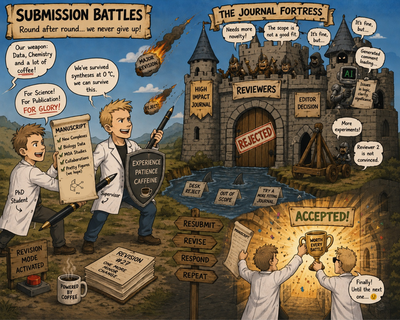
Whenever someone asks me what my favourite PhD project has been, my answer is always the same: the platinum project. You could call it my first PhD love, one that I never quite managed to forget. Or perhaps it is because this project accompanied me through three countries, introduced me to entirely new fields of research, connected me with incredible collaborators, and taught me lessons that extended far beyond the chemistry and microbiology. After the experiments were finally completed and the manuscript had been written, revised, rewritten, and revised again, I thought the hard part was over. I was wrong. The next challenge was just beginning: the submission battles. Like many papers, this one took a few attempts to find the right home. Along the way, we experienced the usual ups and downs of academic publishing, including one particularly unfortunate rejection that appeared to be influenced by AI-generated comments that bore little resemblance to the actual manuscript. That story probably deserves a blog post of its own.
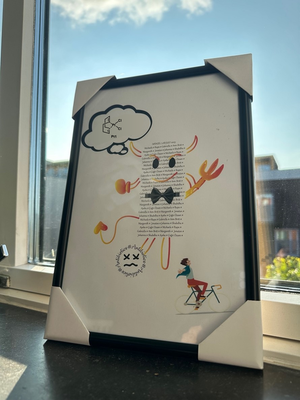
As summary, what started as a simple curiosity soon became a project that followed me across three countries during my PhD journey. From Switzerland, Sweden and finally the UK, with plenty of chemistry, microbiology, failed experiments (of course), and unexpected results along the way, this small unanswered question gradually evolved into the paper you’re reading about today. When you read a scientific paper, you usually only see the final result: the data, polished beautiful figures, and the conclusions. What you do not see are the failed experiments, unexpected results, long discussions, international collaborations, countless hours in the lab, and the people who helped make it all possible. Last, but certainly not least, none of this would have been possible without my supervisor, Dr. Angelo Frei. I cannot thank him enough for everything he has contributed to both my academic and personal development throughout my PhD journey. From the very beginning, he trusted me with this project, encouraged me to explore new ideas, and supported me through the challenges along the way. His guidance, patience, and belief in me have played a huge role in shaping not only this work but also the scientist I am becoming. Looking back on this project, I am deeply grateful for the opportunities, support, and mentorship he has provided. This story would not exist without him.
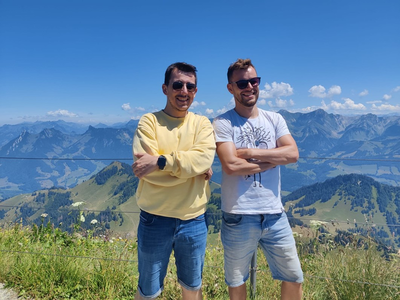
Through this blog, I wanted to give you a small glimpse behind the scenes of this project. After all, every paper tells a scientific story, but the journey behind it is often just as interesting. Thank you very much for reading, until the next time!
Çağrı